
A Cuban link chain is designed to feel solid, which is exactly why the clasp can sometimes seem confusing the first time you wear one. If you are planning to add a pendant, create a layered look or simply remove the necklace safely, knowing how to open a Cuban link chain correctly can help prevent scratched metal, bent clasps and damaged links.
The most important point is simple: opening the clasp is not the same as opening the chain links. Most finished Cuban links are formed to stay permanently connected. For everyday styling, you should work with the clasp, pendant bail or removable connector rather than forcing individual links apart.
Start by Identifying the Clasp
Before applying any pressure, look closely at the closure.
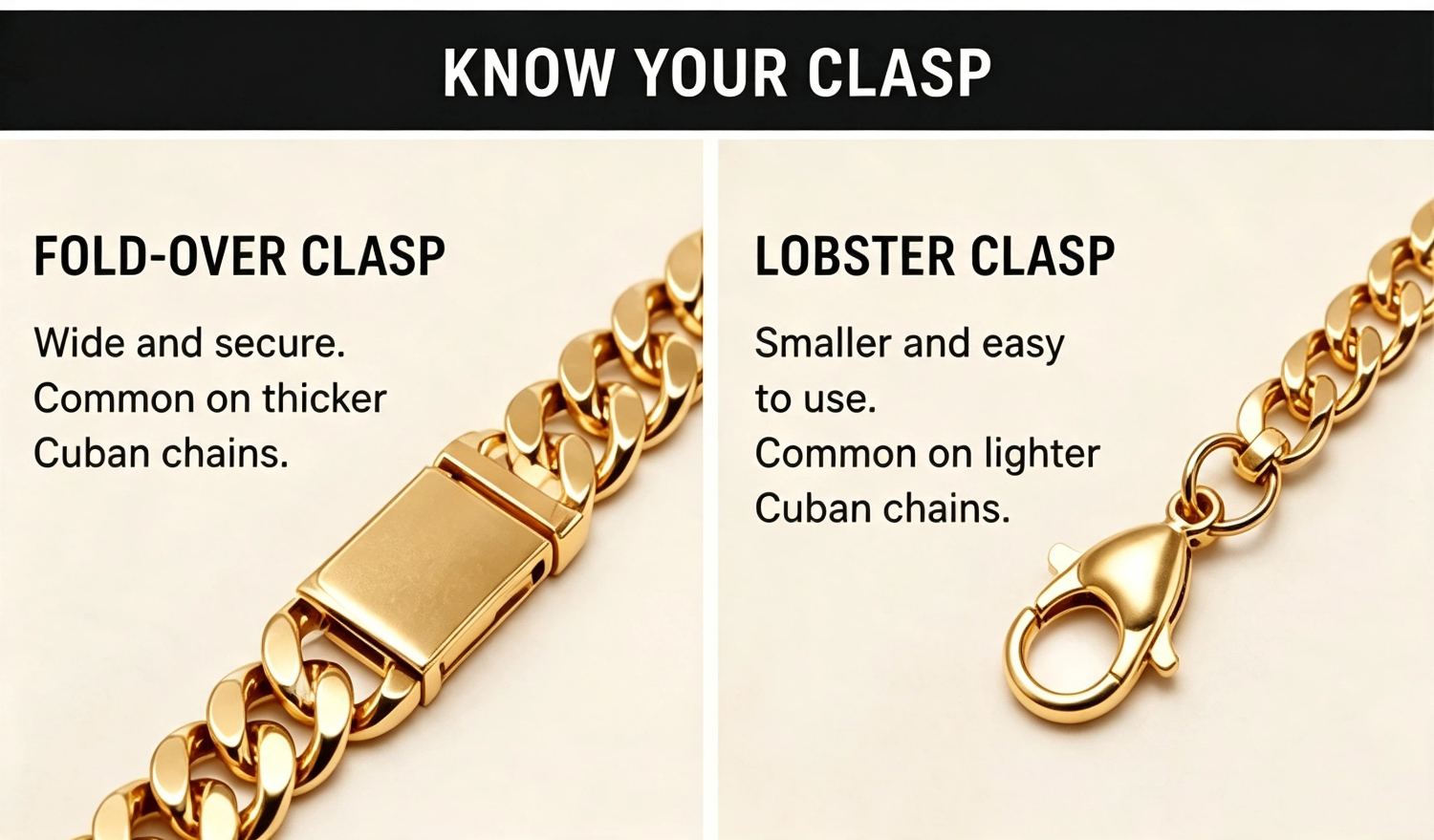
ChainsHouse Cuban designs currently use more than one clasp type. Some 316L stainless steel Miami Cuban styles use a fold-over clasp, while other Cuban chains use a lobster clasp.
A fold-over clasp usually looks wider and more integrated into a chunky chain. A lobster clasp is smaller, with a spring-loaded lever that opens a curved hook.
Knowing which one you have makes the process much easier.
For example, a stainless steel cuban link chain can be available in widths from 5mm to 14mm with a fold-over closure, so it should be opened from the clasp mechanism rather than by pulling on the surrounding links.
How to Open a Fold-Over Cuban Chain Clasp
A fold-over clasp is common on heavier Cuban chains because its broader construction complements the weight of the necklace.
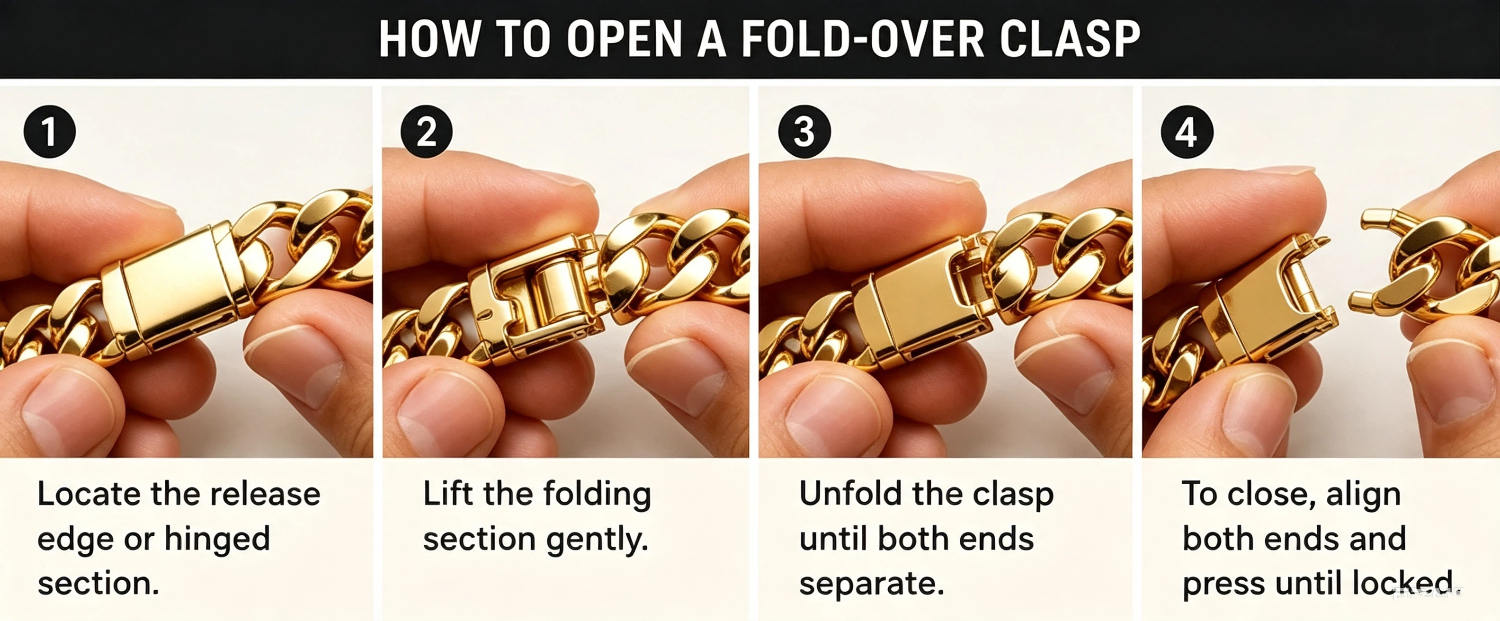
First, place the chain on a table or hold the clasp firmly between your fingers. Do not let the full weight of the necklace hang from the closure while opening it.
Locate the hinged section or release edge. Use your fingernail to lift the outer folding section gently. Once the first section releases, unfold the clasp until the connected ends separate.
Avoid twisting the clasp sideways. The movement should follow the direction of the hinge.
When closing it again, align both ends first, fold the clasp back into position and press until it feels securely locked.
If the clasp suddenly becomes unusually difficult to open, do not force it with pliers. A bent or damaged closure is better inspected professionally.
How to Open a Lobster Clasp
A lobster clasp is simpler and commonly appears on lighter Cuban and curb-style chains.
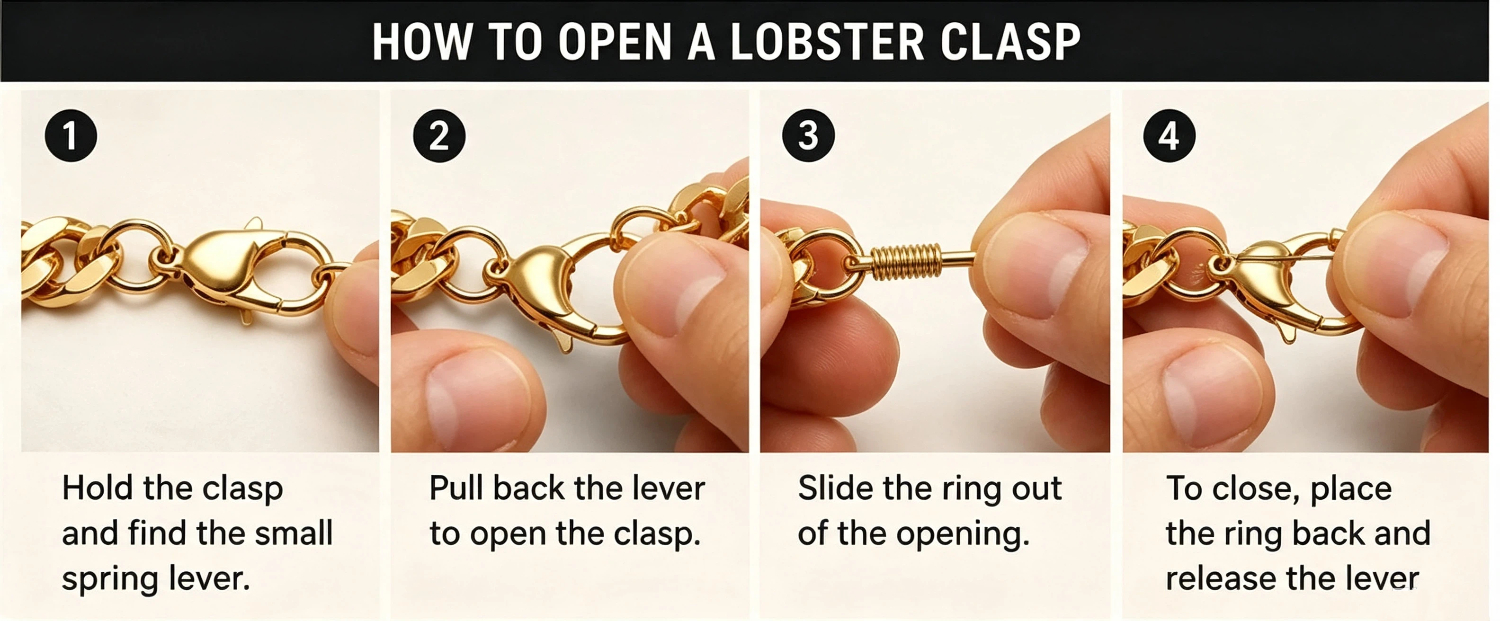
Hold the clasp body with one hand and pull back the small spring lever with your thumbnail. This retracts the moving section of the clasp.
Slide the opposite end ring out, then release the lever slowly.
To close it, pull the lever again, place the ring inside the opening and release it completely. Give the necklace a light pull afterward to confirm that the clasp has fully returned to its closed position.
ChainsHouse offers cuban chains in multiple widths, finishes and constructions, so checking the product specifications before attempting to open the necklace is useful.
Should You Open the Actual Cuban Links?
For normal styling, no.
The interlocking links are what give a Cuban chain its dense, flat appearance. Cuban links are shaped and aligned so the chain sits smoothly against the body; altering one link can interrupt that alignment.
If your goal is to shorten the necklace, replace a damaged section or permanently insert a custom component, that becomes a jewelry-repair job rather than everyday DIY styling.
Do not push screwdrivers, needles or household pliers between links. These can leave visible pressure marks, distort polished surfaces or weaken the connection.
GIA treats chain repair and soldering as bench-jeweler skills, which is a useful reminder that structural chain modification is different from simply adding accessories.
What to Check Before Adding a Pendant
If you want to customize your Cuban necklace, first compare the pendant bail with the widest part it needs to pass over.
The pendant opening must clear either the chain link or the clasp/end connector. This becomes especially important with a chunky Cuban link necklace, because a small pendant bail may fit the visual style but not physically slide onto a 12mm or 16mm chain.
Before buying a pendant, check:
| Factor | Why It Matters |
|---|---|
| Chain width | Determines the minimum pendant bail opening |
| Clasp width | A pendant may need to pass over the clasp |
| Pendant weight | Heavy pendants can pull a thin chain forward |
| Chain length | Controls where the pendant sits |
| Metal color | Helps the finished look feel intentional |
If the pendant does not fit, a removable pendant connector or larger bail is usually safer than opening a structural Cuban link.
How to DIY a Cuban Chain Around Your Personal Style
Customization does not have to mean physically rebuilding the chain.
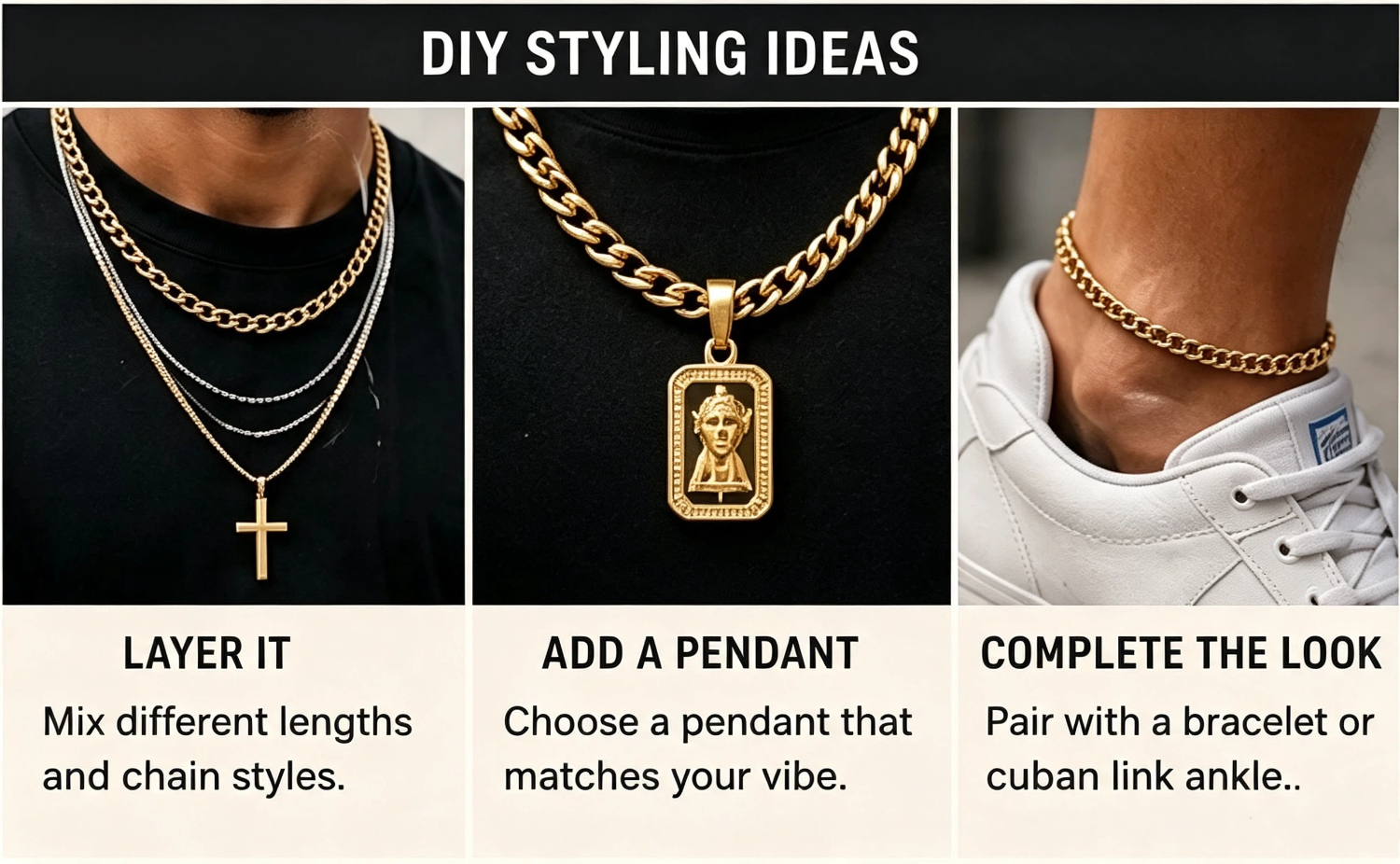
One of the easiest approaches is layering. Pair a medium Cuban chain with a longer rope, box or Figaro necklace. Leave roughly two inches between lengths so each texture remains visible.
For a cleaner look, wear one Cuban chain with a meaningful pendant. Initials, crosses, dog tags and geometric pendants can change the character of the necklace without altering the links.
A cuban figaro chain creates another option. Figaro construction alternates different link sizes, giving it more visual rhythm than a continuous Cuban pattern. ChainsHouse currently offers Cuban-Figaro designs in several widths, including 4mm, 6mm, 9mm and 13mm.
You can also repeat the same link language elsewhere. A cuban link anklet or bracelet gives a coordinated effect without requiring every accessory to match exactly.
Choose the Right Cuban Chain Before You Customize
DIY styling becomes easier when the base chain already fits your proportions.
A 3–5mm Cuban chain tends to work better with smaller pendants and layered looks. Widths around 6–9mm have enough presence to work alone but can still support some pendants. Once you move into 10mm and wider chains, the necklace often becomes the statement by itself. ChainsHouse’s own size guide uses similar ranges when comparing subtle, balanced and statement Cuban styling.
For a bolder base piece, the chunky cuban link necklace is offered in wider profiles and 316L stainless steel, making the chain itself the main visual feature rather than simply a support for a pendant.
Protect the Clasp After Customizing
Adding pendants and layering chains creates extra movement, so inspect the clasp occasionally.
Make sure the spring lever returns fully on a lobster clasp and that a fold-over closure locks firmly. If a clasp starts opening by itself or feels noticeably looser, stop wearing the necklace until it can be checked.
After wear, wipe the chain with a soft cloth and store it separately rather than leaving several necklaces tangled together. GIA recommends individual storage to reduce scratching and accidental jewelry damage.
If you want to understand how link width, length and body proportions affect styling before customizing your chain, read the ChainsHouse Cuban chain size and style guide.
The safest DIY Cuban chain is one customized through styling—not by forcing the structure apart. Open the clasp correctly, choose accessories that fit the chain and let the Cuban links remain strong enough to do what they were designed to do.
FAQ
1. How do you open a Cuban link chain?
Identify the clasp first, then operate its release mechanism without pulling or twisting the surrounding links.
2. How do I open a fold-over Cuban clasp?
Support the clasp, lift the folding release section gently and unfold it in the direction of the hinge.
3. Can I open a Cuban link with pliers?
It is not recommended because pliers can deform, scratch or weaken a structural link.
4. Can I add a pendant to a Cuban chain?
Yes, as long as the pendant bail or connector fits over the chain or its end hardware.
5. Can a jeweler shorten a Cuban chain?
Yes, structural shortening or link removal is better handled by an experienced jewelry professional.
